
Chemical Imbalance: Deterministic Fallacy
We didn't evolve to be miserable all the time, but trauma is escapable.

I think that’s just one more trick our sick brain is playing on us, to make us feel even worse. It’s yet another form of self-blaming, a hallmark of the depressive state. The truth is no one would knowingly choose to suffer this hell if he knew any better. Looking at healthy happy people doesn’t give you any knowledge as to how they are doing it. In fact even they have no idea how; they were just blessed with a healthy mind. So those people can preach until the sun is blue how you should do that and think that, but it’s complete bs. If I could I surely would
— u/matfish22, r/depression
Depression is usually not deterministically a result of being born with an “unhealthy mind”. It is the result of an endless barrage of metabolic and psychosocial insults: being overweight, sedentary, and constantly inflamed; being unloved, socially traumatised, and bombarded with endless sources of insecurity; having no orientation or sense of optimism; having your reward system hijacked by social media, video games, and hyperpalatable food; and an unwillingness to tolerate discomfort. These risk factors describe the majority of Westerners, and it is a miracle more people are not depressed. We are neither blank slates nor entirely determined. I had a dysfunctional childhood. Adverse childhood experiences (ACEs) are traumatic and stressful events that occur to a child before the age of 18. ACE questionnaires typically score out of 10, with each item corresponding to one type of adversity: emotional abuse, physical abuse, household domestic violence, etc. People with high ACE exposure have massively increased risks of cancer, obesity, depression, suicide and various other ailments. I score a 6 out of 10; a meta-analysis estimates that only about 16% of the global population has 4+ ACEs, which means I easily score in the 90th percentile of childhood trauma. Really, I should be a complete mess—and I was. I spent my childhood with crippling anxiety, and spent my 18th year fantasising about injecting myself with a lethal dose of heroin (hey, I’ve never been epistemically incompetent).
Of course, things are not so black and white in reality. You know what else can cause suicidal depression? A loss of faith in the symbolic order—the Life Script™️ that gives you a sense of orientation, optimism and purpose. If you accidentally attain too many object-causes of desire early in life—attractiveness, online fame, academic success—the scripts shatter as you realise that they don’t fulfil. You’re left adrift in an incomprehensible hell, where words become floating signifiers that mean nothing, and every movement feels like a betrayal of the void left behind. Before, you felt sad all the time, but you could mask it with the hope that there was a way to fix it. After, whatever traumas you’ve accumulated magnify, and the only way out seems like death. My crippling childhood trauma in addition to the collapse of my symbolic order triggered a death spiral.
But wait, how did I make it out? Was it my high serotonin baseline? High serotonin massively augments memory, cognition and learning, improves tolerance for discomfort, and has antidepressant effects. I have a prodigious, hyperassociative memory; an IQ well above the 99th percentile; and have always had an unusual disregard for hunger, cold and heat. High serotonin seems to fit my profile to a T. Or perhaps it was the random comment I saw on Reddit once mentioning meditation techniques, which helped me to realise I could leverage my attention to pull me out of dysfunctional thought loops and self-destructive attempts to resist discomfort. Or maybe it was memories of friends I loved, both in real life and in the many fictional worlds I devoured as a child. Perhaps it was the secure attachment style I miraculously managed to maintain, which meant my head wasn’t filled with the incessant alarm of self-hatred or the fear of abandonment. Or perhaps I just got tired of being miserable all the time and realised I was never actually going to kill myself—reaching total abjection may actually have been a lucky thing for me. My point is that all of this is a confusing, complicated mess. My childhood trauma didn’t determine my fate any more than my symbolic disillusionments or the structural hellscape of end-stage capitalism. Life is total chaos. In the end, the only thing that pulled me out was my remaining belief in that small sliver of freedom we all have in a cruel, structurally constrained, but not-yet-determined universe.
I talk a lot about how most suffering is optional in my essays. I mention I have a loving mother and a secure attachment style. It is easy to extrapolate from this that I had a stable childhood and everything was fine. Though things are okay for now, it was most certainly not. I had few places of emotional safety, and my physical safety in my earlier years was spotty. I had a childhood that would have crippled a lot of people; it certainly did my brother. As a teen, I spent an entire goddamn year alone in the city eating ramen and rice and mushrooms and thinking about lethal doses of opioids. A high ACE score made me tremendously more likely to develop long COVID—the crippling, agonising post-viral illness that develops after the initial sickness—and I had to rewire my psyche while my body was housebound and screaming. I write this to dispel any notion that I had it easy, which is to show that the glimmer of agency we have is always more significant than we think. But honestly, in the modern hellscape of insecurity, things are not okay for anyone; most people are just barely holding themselves together with overinflated fantasies and a decrepit symbolic order.
But even when it’s not a choice, you have to act like it is. Let me show you what’s viable in the rare cases it turns out that the imagined agency is real. In the end, I dissolved most of my ego/symbolic scaffolding, and left myself with a minimally functional core orientation. I now feel like I’m on a low dose of codeine and LSD all the time—essentially a mild 7th jhana-like state, for those who are aware, or a permanent post-orgasmic high. This is not an exaggeration—I am not saying this to show off, but because everyone else is insidiously wrong about the malleability of the mind. The warmth you get in your chest when you’re in love is there for me all the time. It is extremely psychedelic, and about as pleasant as you’d expect. But I had to deflate a myriad inflated modern attachments to get here, each one covering an inflated modern insecurity, and each one triggering a hellish Dark Night of fear and disorientation.
This is not to say that I think pain is good: I still wear warm clothes when I’m sick; I still take ibuprofen when I have a headache; and I still have to take breaks from texting and the internet to give my nervous system a rest. And if some psychopath decides to torture me, I’m still screwed. Most suffering is entirely pointless, and most attempts to narrativise it are just loss aversion. Rupture is only worthwhile if it’s generative—if a short-term burst of chaos leads to a more stable longer-term state. Attempts to hold on tightly to order accelerate disorder on net. We have to teach our minds it’s okay to be totally exposed, over and over, until we revert to something like an ancestral baseline where we feel more or less comfortable in our insecurity most of the time, palliated by a strong sense of purpose and community. And the only way to get there is through an irrational belief that it is possible, that it is worth it even if it’s just for a few moments, and that is why I write these essays. If I make a lot of bizarre, arrogant claims throughout my work, it is because I have had a very weird life and seen a lot of very strange things, and often forget how abnormal my experience has been. I have been to places in my mind, both Kafkaesque and euphoric, that most people cannot even begin to fathom; I have known others who have found themselves in even more exotic states. I do not preach beauty and love and equanimity as a naïve optimist; I preach out of an unrelenting belief that the good draws to it the good. That random comment on Reddit that was probably seen by five people changed my life. That is my faith.
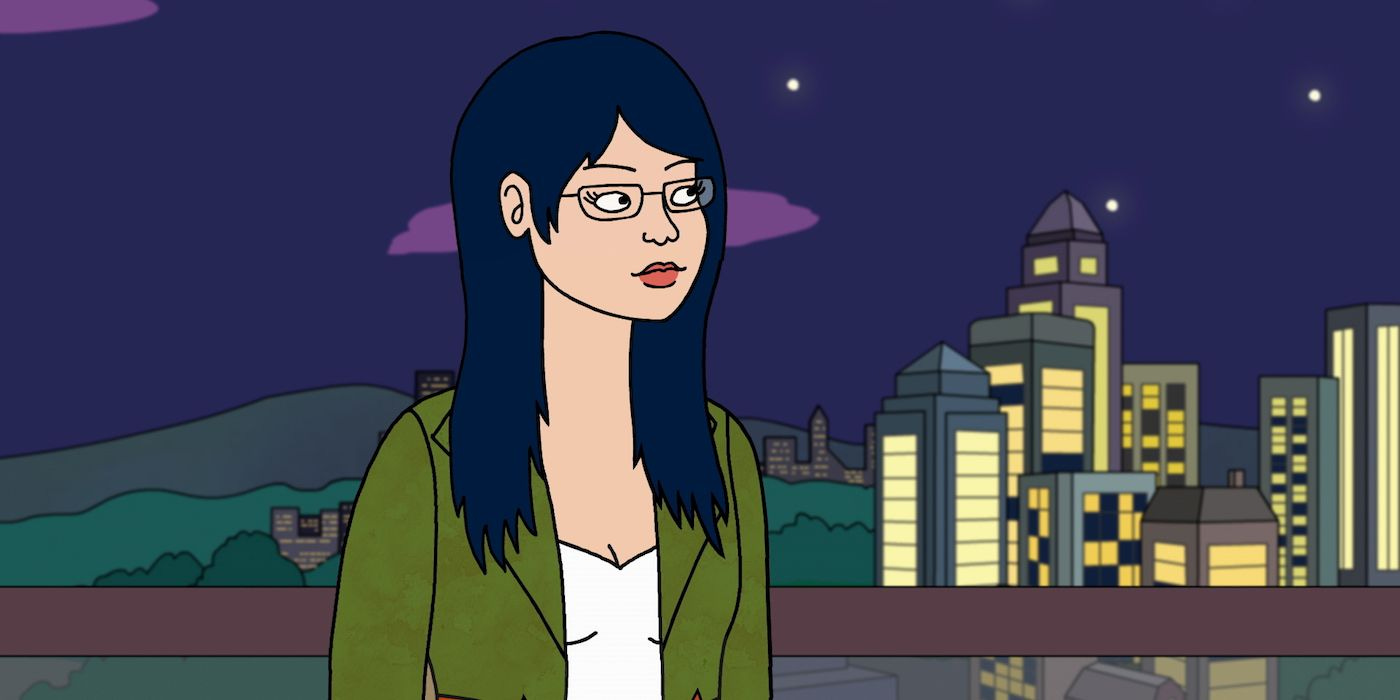
Because if I don’t [write my book of essays now], it means all the damage I got isn’t damage; it’s just damage. I’ve gotten nothing out of it, and all those years I was miserable was for nothing. I could’ve been happy this whole time, and written books about girl detectives, and been cheerful, and popular, and had good parents. Is that what you’re saying? What was it all for?
— Diane, BoJack Horseman
If I haven’t made it clear, don’t be like Diane. For more on generative rupture, see Controlled Chaos. For more on how to dissolve your ego—which at its core really just involves noting that all things are empty, impermanent and unsatisfactory a million times over—see my ridiculous guide Anti-Agency. As civilisation flounders, the tenuous symbolic order that barely holds people together collapses. It is my hope that these terrifyingly vulnerable essays help someone ground themself. They are not fun to expose.
This work is licensed under a Creative Commons Attribution-NonCommercial-ShareAlike 4.0 International License.